
Quick Answer: What Is TPU for Card Protection?
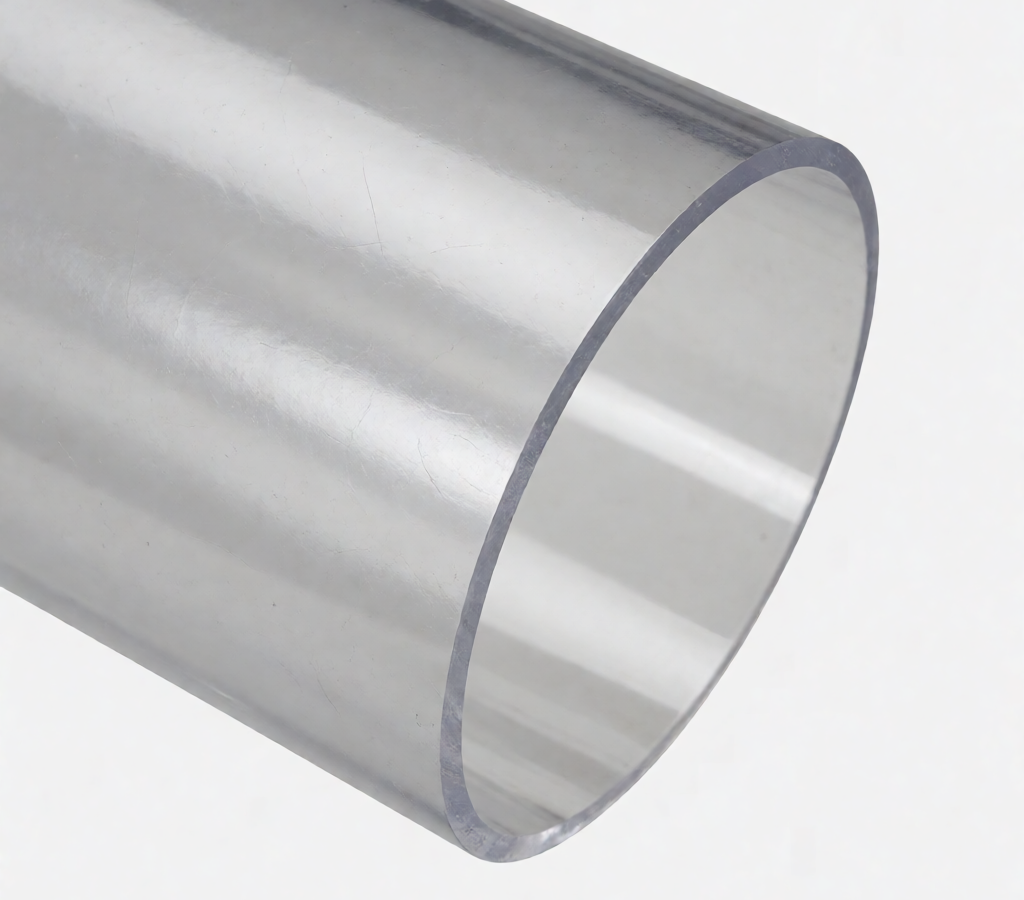
TPU (thermoplastic polyurethane) is a flexible, transparent polymer used to manufacture protective sleeves, top-loaders, and rigid slab-style encasements for graded and ungraded collectible cards. Unlike PVC — the once-dominant material for card sleeves — TPU is chemically stable, pH-neutral, and resistant to yellowing and off-gassing over time. It provides a soft yet durable barrier against scratches, bending, moisture, and dust without reacting with the card surface or any printed coatings.
For collectors and grading submitters, the core advantage is archival safety: TPU does not release plasticizers or acidic compounds that can degrade card stock, ink, or centering over decades of storage. It remains flexible enough to slide cards in and out without creasing edges, while offering more rigidity than standard polypropylene sleeves when higher protection is needed.
Detailed Explanation: How TPU Protects Collectible Cards
Why TPU Is Preferred Over PVC
The shift from PVC to TPU in the card-collecting market has been driven by two problems that PVC sleeves created over time: chemical degradation and physical brittleness.
PVC contains phthalate-based plasticizers that migrate out of the film and settle onto card surfaces. This process — often described as “off-gassing” — can cause:
- Surface hazing on glossy card finishes
- Edge discoloration where the sleeve contacts the card border
- Adhesion issues where the plasticizer bonds with ink layers, making it difficult to remove a card without stress on the corners
TPU does not use these phthalate plasticizers. Its polymer structure relies on urethane linkages that remain stable at room temperature and do not leach into adjacent surfaces. That makes TPU the material of choice for long-term collection storage and for grading submission protection, where the condition of the card surface is directly evaluated.
Physical Protection Mechanisms
TPU protects cards through a combination of mechanical cushioning and environmental sealing:
Scratch resistance. TPU has a higher surface hardness than polyethylene or low-grade PVC, which means it resists micro-abrasions from handling, stacking, and display cases. The material itself can be scratched, but that surface wear rarely transfers to the card underneath.
Flexibility without permanent deformation. A good TPU sleeve bends under pressure and springs back to its original shape. This absorbs shock from drops or impacts better than rigid plastic, which either cracks or transfers force directly to the card.
Moisture barrier. TPU has lower water vapor transmission than many commodity plastics. While no plastic sleeve is fully waterproof, TPU slows the passage of humidity — a critical factor in preventing warping and mold in stored cards.
Chemical inertness. TPU does not react with the lignin in paper card stock, the coatings on trading cards, or the adhesive in team-logo stamps and holograms. This inertness is what makes it archival-safe.
TPU in Rigid Slab-Style Encasements
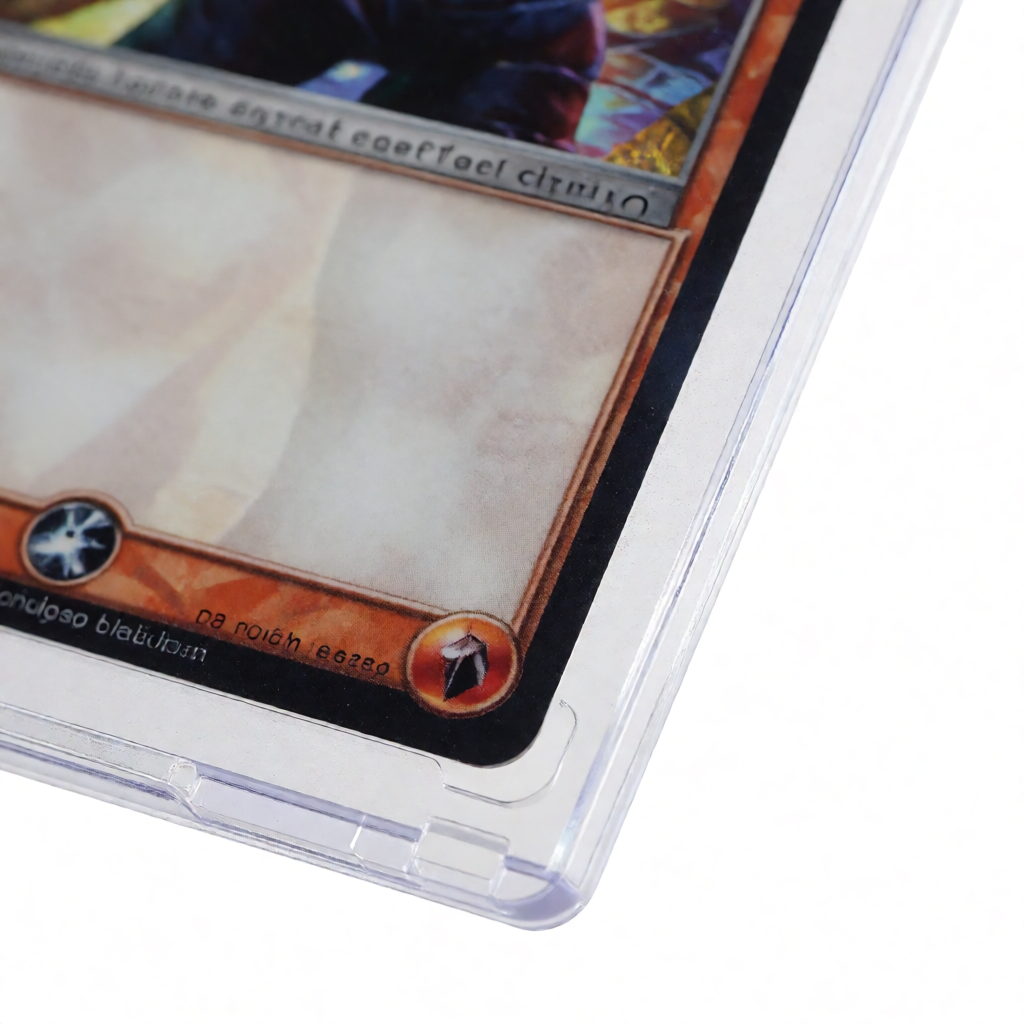
Beyond soft sleeves, TPU is used in hybrid encasements that combine a flexible film with a semi-rigid core. These products are sometimes called slab guards or top-loader alternatives, and they occupy a middle ground between soft sleeves and plastic grading slabs.
A TPU slab guard typically layers a thicker TPU shell (0.8–1.2 mm) around a card, creating a unit that stands upright on a shelf without bending. The material retains enough flexibility that it can be opened for card insertion, then snaps or adheres closed to form a protective housing.
When evaluating TPU for slabs, the key differentiator is whether the material maintains clarity after the molding or lamination process. Lower-grade TPU can develop a slight haze during extrusion; archival-grade TPU remains optically clear across the full visible spectrum.
Key Specifications: What to Look for in TPU Card Products
Thickness and Gauge
TPU card products are offered in a range of thicknesses, each serving a different use case:
| Thickness | Typical Use | Protection Level | Pocket Bulk |
|---|---|---|---|
| 0.25–0.40 mm | Everyday sleeves, top-loaders | Light (scratch and bend resistance) | Minimal |
| 0.50–0.75 mm | Grading submission, long-term storage | Moderate to high | Low to moderate |
| 0.80–1.20 mm | Slab-style encasements, display units | High (rigid, stand-up) | Moderate to high |
For collectors submitting to grading companies, a thickness in the 0.50–0.75 mm range is commonly recommended. It provides enough rigidity to prevent edge curl during shipping while remaining thin enough to fit in standard grading submission envelopes.
For everyday carry, 0.25–0.40 mm TPU sleeves balance protection and portability.
Optical Clarity
Clarity is measured qualitatively in most collector-facing products, but the difference between archival-grade and budget TPU is noticeable. High-clarity TPU transmits 90% or more of visible light with minimal color cast. Lower-grade TPU can appear slightly blue-tinted or cloudy, especially in thicker gauges.
For display-ready card preservation, clarity matters because it affects how the card’s colors and gloss are perceived. A hazy sleeve diminishes visual appeal even when the physical protection is adequate.
Flexibility and Memory
Flexibility is the hallmark property that distinguishes TPU from materials like PETG or rigid polystyrene. A flexible TPU sleeve can be peeled open wider than its resting state without cracking or weakening at the fold line. This property is tested by bending the material through 180 degrees repeatedly — archival-grade TPU should show no whitening (stress crazing) or permanent set after 500+ cycles.
pH Neutrality
pH-neutral TPU is non-negotiable for archival applications. A material with acidic or alkaline properties can catalyze the breakdown of cellulose in card stock over time, leading to yellowing and embrittlement. Independent testing labs measure pH by extracting a small sample of the plastic in deionized water and reading the resulting solution. Neutral TPU registers between pH 6 and pH 8 on this test.
Standards & Requirements: Archival Safety and Testing
There is no single regulatory body that certifies TPU for card protection, but several industry standards and testing frameworks define what archival safety means in practice.
ASTM Standards for Archival Materials
ASTM E2092 provides guidance for evaluating the suitability of materials for use with paper and paper-based artworks. While not specific to trading cards, the test protocols — including acidity testing, outgassing assessment, and long-term stability monitoring — are the framework most grading companies and archival institutions reference when assessing protection materials.
Collectors and graders should look for TPU products that have been tested against these principles, even if the manufacturer does not advertise a specific ASTM code number.
Contactless Payment and RFID Considerations
Some TPU card products are marketed as RFID-blocking. It is important to understand what this claim actually means.
Standard TPU is not inherently RFID-blocking. Shielding requires an embedded layer of conductive material — typically a fine metal mesh or ferrite film laminated between TPU layers. When present, this layer attenuates radio-frequency signals in the 13.56 MHz range (the frequency used by NFC and contactless payment cards).
According to EMVCo specifications, contactless payment cards operate at 13.56 MHz using ISO/IEC 14443 protocols. A properly shielded TPU holder should reduce signal strength at this frequency by at least 20–30 dB to prevent accidental reads. However, the degree of shielding varies by product, and no sleeve can guarantee 100% blocking across all frequencies and reader types.
Practical Testing Checklist
Before purchasing TPU in bulk or committing to a long-term storage solution, consider requesting the following from the manufacturer:
- pH extraction test results (target range: 6–8)
- Yellowing index data after accelerated aging (typically 30–90 days at 60°C / 65% RH)
- Clarity measurement (light transmission percentage)
- Flex-cycle durability data (number of bend cycles before stress crazing)
- RFID-shielding attenuation data (if the product claims blocking)
Related Considerations: TPU vs. Alternatives and Broader Uses
TPU vs. PVC
PVC is the historical baseline that TPU has largely replaced in the collector market. The comparison is straightforward:
| Property | TPU | PVC |
|---|---|---|
| pH neutral | Yes | Rarely — often acidic |
| Plasticizer content | None (phthalate-free) | Yes — phthalates migrate over time |
| Yellowing resistance | High | Low to moderate |
| Flexibility | High, maintains memory | Moderate, becomes brittle with age |
| Odor | Low | Can emit strong chemical smell |
| Cost | Higher | Lower |
For grading submission protection and long-term storage, TPU is the clear preference. PVC sleeves may still be found in budget product lines, but they carry a documented risk of surface damage to cards over time.
TPU vs. Polypropylene (PP)
Polypropylene is another common sleeve material. It is cheaper than TPU and generally safer than PVC, but it lacks the same level of flexibility and clarity. PP sleeves can feel stiff and may not conform as closely to card edges, leaving gaps where dust can enter. TPU offers a superior balance of softness, clarity, and conforming fit — at a higher price point.
TPU vs. Leather and Silicone
Leather card holders and silicone sleeves are alternative options that serve different use cases. Leather offers aesthetic appeal and a premium feel but provides little moisture or scratch protection unless lined with an inner sleeve. Silicone is highly flexible and durable but tends to attract dust and lint, and it can distort card dimensions if the grip is too tight.
For raw protective performance, TPU remains the most purpose-built material. Leather and silicone are better suited to style-forward everyday carry rather than archival storage.
TPU in Grading Submission Protection
When submitting cards to grading companies, the protective sleeve you use can affect the evaluation process. A sleeve that yellows, off-gasses, or sticks to the card surface may be flagged during inspection or, worse, could cause damage during removal.
This is why grading policy changes increasingly emphasize the importance of using chemically stable, archival-safe materials in submission packaging. A TPU sleeve that has been tested for pH neutrality and outgassing minimizes the risk of the card being damaged before it even reaches the grader’s desk.
TPU Odor and Off-Gassing
Some collectors report a smell when opening new TPU products. A mild, initial odor is normal for many polymers and typically dissipates within 24–48 hours of airing out. A strong, persistent chemical smell — especially one that causes eye or throat irritation — may indicate a lower-quality formulation with residual solvents or unreacted monomers.
If you are sensitive to odors or storing cards in sealed containers, allow new TPU products to ventilate before use. For a deeper discussion of this topic, see Protector Odor — Is It Safe?.
Real-World Use Scenarios
Airports and travel. TPU sleeves protect cards from the humidity and temperature fluctuations encountered during air travel. A 0.50–0.75 mm TPU sleeve keeps cards flat and prevents edge curling that can occur when paper stock absorbs and releases moisture rapidly.
Crowded transit and events. For collectors who carry cards in wallets or pockets, a slim TPU sleeve (0.25–0.40 mm) provides scratch resistance without adding bulk. If the holder includes RFID shielding, it also reduces the risk of accidental contactless payment reads in crowded environments.
Display and shelving. Thicker TPU slab guards (0.80–1.20 mm) allow cards to stand upright on display shelves without leaning or bending. The material’s rigidity maintains the card’s vertical position while its flexibility absorbs minor impacts from nearby movement.
Additional Context: Where TPU Material Is Used Beyond Cards
TPU’s combination of clarity, flexibility, and chemical stability makes it useful in many other protectant applications beyond collectible cards. It is found in smartphone screen protectors, medical device housings, watch crystal covers, and industrial film laminations. The same archival-grade formulations that protect trading cards are evaluated for use with delicate photographs, documents, and printed artwork.
For K-pop photocard collectors and similar subgroups, TPU sleeves have become a standard recommendation because the cards are often small, heavily handled, and collected in volume. A well-made TPU sleeve protects K-pop photocards from the bent corners and surface scuffs that accumulate through repeated viewing and trading.
At the same time, TPU is not a universal solution. In high-humidity environments, even TPU sleeves can trap moisture against card surfaces if the seal is too tight and the environment is not controlled. For waterproof card cases, proper seal design and periodic inspection are essential — see Waterproof Card Case Seal Deterioration for guidance on identifying and replacing worn seals.
How the Industry Evaluates and Sources TPU Card Products
As a manufacturer, our approach to TPU card protection is rooted in the same standards collectors and graders look for. We source archival-grade thermoplastic polyurethane that has been tested for pH neutrality, optical clarity, and long-term flexibility retention. Our process starts with understanding the specification — thickness, gauge, clarity target, and whether the product needs to function as a soft sleeve, a top-loader, or a rigid slab guard — and then engineering the extrusion and finishing to match.
We hold ISO 9001 and IATF 16949 certifications, operate a 50,000-square-foot facility in Shenzhen with a monthly capacity of 500,000 units, and maintain in-house CNC machining and surface-finishing capabilities. That means we can adjust tooling, film formulation, and post-processing parameters without outsourcing critical steps. For buyers who need custom TPU card protectors — whether for private-label distribution, grading-submission-specific gauges, or hybrid slab designs — we work directly with the specification rather than pushing a standard catalog.
Contact Our Team to discuss your project requirements.
Sources & References
- ASTM E2092 — www.astm.org
- EMVCo specifications — www.emvco.com
- grading policy changes — topcardcase.com
- Protector Odor — Is It Safe? — topcardcase.com
- protects K-pop photocards — topcardcase.com
- Waterproof Card Case Seal Deterioration — topcardcase.com
- Contact Our Team — topcardcase.com