
Quick Answer — What causes waterproof card case seals to deteriorate?
Waterproof card case seals deteriorate because the elastomeric material that forms the compression gasket gradually loses its ability to recover its shape and maintain a continuous seal. The primary mechanisms are compression set — where the gasket strip stays flattened instead of bouncing back — UV and ozone breakdown that cracks and hardens the polymer, temperature cycling that stresses the material at the sealing lip, and chemical exposure from sunscreen, salt spray, or cleaning agents that degrade the waterproof barrier. Over time, these factors combine to reduce the seal’s contact pressure against the enclosure wall, creating micro-gaps that allow moisture and humidity to penetrate. For collectors storing graded slabs in humid climates or transporting cards through outdoor environments, this deterioration can happen noticeably within one to three years depending on material quality and exposure conditions.
Detailed Explanation — How do environmental factors break down seal materials over time?
UV Radiation and Ozone Attack
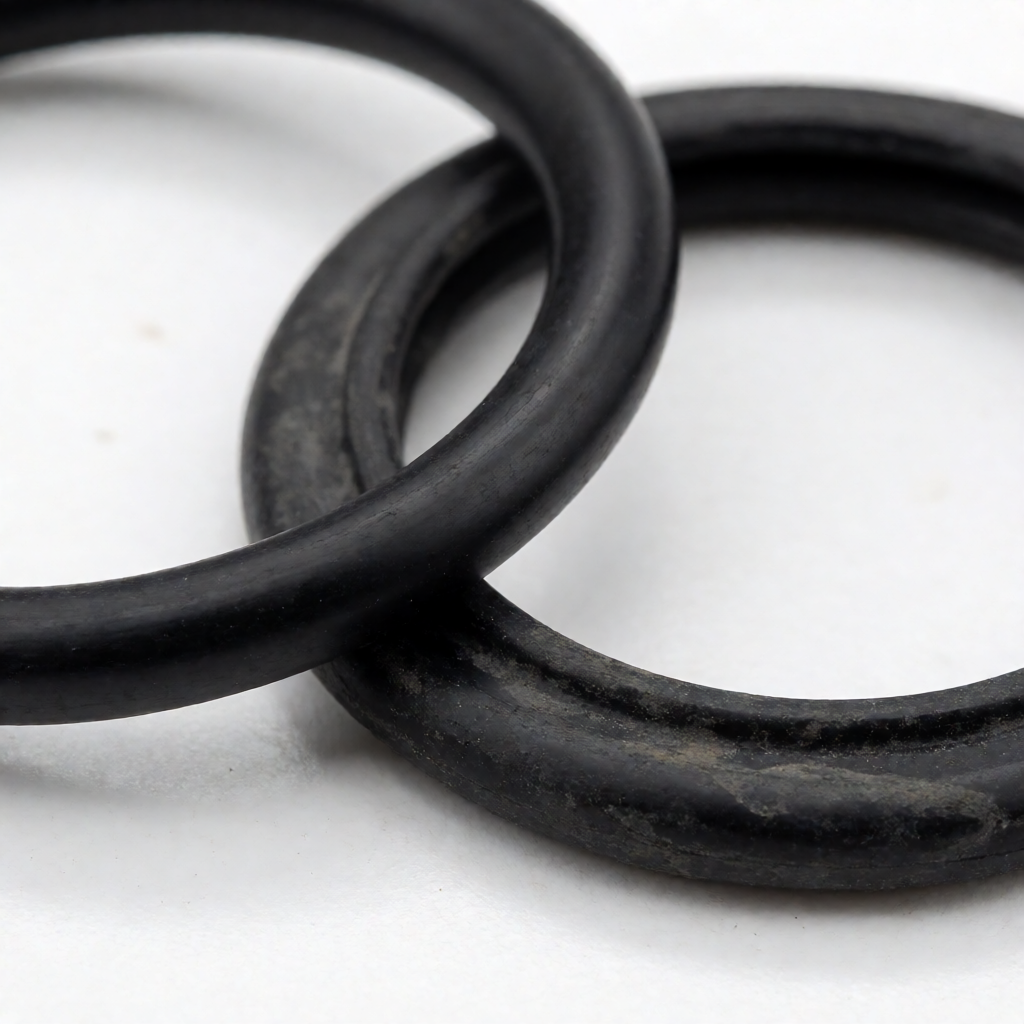
Ultraviolet light initiates photo-oxidative chain scission in most elastomers, breaking polymer crosslinks and causing surface hardening, micro-cracking, and loss of elasticity. Ozone is especially aggressive toward unsaturated rubbers like natural rubber and some TPE formulations, attacking double bonds in the polymer backbone and producing characteristic surface crazing perpendicular to any applied stress. Even indoor UV exposure from windows or artificial lighting contributes to this process over months and years. Silicone and EPDM generally offer superior UV and ozone resistance compared to standard TPE, which is why material selection directly determines service life.
Compression Set and Permanent Deformation
A compression gasket in a graded card case is designed to be squeezed between two mating surfaces every time the enclosure is opened and closed. Each cycle imposes elastic and plastic strain. Over repeated cycles and prolonged static compression, the elastomer undergoes permanent deformation — it cannot return to its original cross-section even when unloaded. This is compression set, and it is measured as the percentage of recovered height after a defined compressive load is held at an elevated temperature for a set period. When compression set exceeds roughly 20 to 30 percent, the seal no longer generates adequate contact pressure on the sealing face, and the hermetic seal integrity begins to decline. Collectors who store cases continuously closed for extended periods — such as archival-grade slab storage — may experience higher compression set rates because the material never gets a recovery cycle between compressions.
Temperature Cycling and Thermal Degradation
Temperature swings cause the seal material and the case housing to expand and contract at different rates. Most thermoplastic and rubber sealants have different coefficients of thermal expansion than polycarbonate or acrylic case bodies. This differential movement introduces shear stress at the interface and can progressively loosen the seal or create gaps. Repeated thermal cycling also accelerates oxidative degradation inside the polymer matrix. Cases stored in environments that experience daily temperature variation — a garage, vehicle trunk, or unconditioned storage room — typically see faster seal aging than those kept in stable, climate-controlled conditions.
Chemical Exposure
Sunscreen chemicals, particularly oxybenzone and octinoxate, can plasticize or attack certain elastomers. Salt spray from marine environments deposits crystalline residues that abrade the sealing lip and attract moisture into micro-fractures. Chlorine from swimming pools reacts with many rubber compounds, causing swelling, softening, or hardening depending on the base polymer. Hand lotions, adhesive residues from handling slabs, and even certain humidity-control silica gel packaging materials can leave chemical deposits on the gasket surface that compromise the waterproof barrier over time.
Combined and Accelerated Degradation
In practice, seal failure is rarely caused by a single factor. A typical collector scenario combines moderate UV exposure, seasonal temperature variation, occasional chemical contact from handling, and continuous compression during long-term storage. These stressors interact synergistically — UV-induced surface cracking allows moisture to penetrate deeper, which then accelerates hydrolytic degradation of susceptible polymers. Understanding the cumulative nature of deterioration is essential for making informed decisions about seal replacement timing and material selection.
Key Specifications — What are the key specs for waterproof card case seals?
Common Seal Materials and Their Profiles
Different elastomer families offer distinct trade-offs in longevity, chemical resistance, compression recovery, and cost. The following comparison reflects typical performance ranges observed across graded-card case applications and is intended as a decision framework rather than an absolute guarantee, since actual service life depends on environmental conditions, usage frequency, and manufacturing quality.
| Seal Material | Typical Lifespan Range | UV Resistance | Ozone Resistance | Compression Set | Chemical Vulnerability | Cost Level |
|---|---|---|---|---|---|---|
| Silicone | 3–7+ years | Excellent | Excellent | Low | Moderate — vulnerable to oils, solvents | Medium-high |
| EPDM | 2–5 years | Good | Excellent | Low-moderate | Moderate — vulnerable to fuels, oils | Low-medium |
| TPE / TPV | 1–3 years | Poor-moderate | Poor-moderate | Moderate-high | Moderate | Low |
Silicone remains the preferred choice for long-term graded slab storage in humid or variable environments because of its exceptional stability across temperature ranges and resistance to both UV and ozone. EPDM offers strong ozone and weather resistance at a lower price point but can soften or swell when exposed to petroleum-based products or certain adhesives commonly found in card handling. TPE and thermoplastic vulcanizates provide good initial sealing performance and cost efficiency but tend to exhibit higher compression set and faster UV degradation, making them more suitable for short-term transport use rather than archival storage.
Compression Set Metrics
Compression set is measured per test methods such as ASTM D395 Method B, which evaluates the permanent deformation of a compressed specimen after exposure to elevated temperature for a defined period. A lower compression set percentage indicates better resilience and longer functional life. For waterproof card case applications, a compression set value below 20 percent after standard testing is generally considered acceptable, while values above 30 percent typically signal that the seal will no longer maintain reliable water resistance under normal operating conditions.
Durometer and Cross-Section Geometry
Seal hardness, measured on the Shore A scale, affects both the force required to close the case and the contact pressure generated at the sealing interface. Softer durometers in the 40–60 Shore A range conform more easily to minor surface irregularities, while harder formulations in the 70–90 Shore A range resist extrusion and deformation but require greater closing force. Cross-sectional geometry — O-ring, D-ring, rectangular gasket strip, or custom profile — determines how the seal contacts the mating surfaces and how effectively it distributes compression. Standard rectangular profiles are common in card case design because they provide consistent contact pressure along the entire perimeter of the enclosure.
Standards & Requirements — What standards apply to waterproof card case seals?
IP Rating Context for Card Cases
The Ingress Protection (IP) rating system defined by IEC 60529 specifies the degree of protection against solid particles and liquid water. An IPX4 rating indicates resistance to water splashes from any direction, while IPX7 denotes protection against temporary immersion up to one meter for thirty minutes. It is important to understand that a small card case with a complex multi-point closure geometry rarely achieves the same IP threshold as a smartphone enclosure, because seal contact pressure and gap tolerances are difficult to control consistently across a larger perimeter with hinges, latches, or interlocking clips. Many manufacturers target IPX4 or IPX5 as a realistic performance level for card-specific enclosures, while others market IPX7 under ideal laboratory conditions that may not reflect real-world usage with repeated open-close cycles and seal aging.
Material Safety and Certification Standards
Reputable manufacturers source seal materials that comply with relevant safety and quality standards. ISO 9001 certification indicates that a manufacturer maintains a documented quality management system for production processes, including material incoming inspection and finished product verification. For applications where chemical compatibility with card preservation materials is critical, manufacturers may also reference materials safety data sheets and ensure that seal compounds do not off-gas volatile organic compounds that could affect nearby graded slabs. When evaluating potential suppliers, requesting documentation of material certifications and quality process audits provides verifiable assurance beyond marketing claims. For additional context on how material choices relate to card preservation, see our analysis of how grading policy changes affect card accessories and protective solutions.
Testing and Verification
Performance verification for waterproof enclosures typically involves visual inspection, dimensional measurement of the sealing lip, and functional water exposure testing. Manufacturers may conduct leak detection using dye penetrant methods or pressure decay testing during production quality control. For end users, field verification methods described in the next section provide a practical way to assess seal integrity without risking card exposure.
Related Considerations — What should you consider when maintaining or replacing seals?
Visual and Functional Signs of Seal Failure
Identifying a failing seal early prevents irreversible damage to your graded cards. The following indicators help distinguish normal wear from functional degradation. Surface discoloration — yellowing, darkening, or white residue — often signals UV or ozone exposure and may precede cracking. Visible cracks, especially perpendicular to the sealing face, indicate advanced polymer degradation. Loss of elasticity is detected when the sealing lip no longer rebounds after gentle stretching; press the gasket strip lightly with a fingertip and observe whether it returns to its original shape within one to two seconds. Permanent flattening where the seal contacts the mating surface means compression set has progressed beyond acceptable limits. Condensation appearing inside the case after mild humidity exposure, or a visible water line on a grade slab after rain or high-humidity storage, confirms the waterproof barrier has been compromised.
Cleaning and Maintenance Practices That Extend Seal Life
Regular maintenance slows deterioration but cannot reverse it once elastomer degradation has begun. Wipe the sealing lip and gasket surface with a dry, lint-free cloth after each use to remove dust, skin oils, and residue. For deeper cleaning, use a slightly damp cloth with mild soap and water, then dry thoroughly before closing the case. Avoid solvents, alcohol-based cleaners, and abrasive pads, as these accelerate chemical degradation and micro-scratching of the sealing surface. Store cases in a cool, dry, shaded environment when not in use to minimize UV and thermal stress. Do not apply silicone-based lubricants or conditioners to the seal unless specifically recommended by the manufacturer, as many commercial silicone sprays contain carriers and additives that attract dust and can degrade the elastomer over time.
Field Leak-Test Protocol Without Submersion Risk
Full submersion testing risks exposing your cards to water if the seal fails during the test itself. A safer paper-towel method provides reliable indication of seal integrity. Insert a single dry paper towel along the full perimeter inside the closed case, leaving no gaps in the towel placement. Close and latch the enclosure with normal closing force. Wait thirty minutes, then open the case and inspect the towel for any moisture wicking. If the paper towel remains completely dry, the seal is likely still performing adequately. If any damp spots appear, the seal has developed leakage paths and should be inspected for visible damage or replaced.
When to Repair Versus Replace the Entire Case
A deteriorated seal compromises the protection of my graded cards, so the decision to repair or replace the case depends on the extent of seal damage and the condition of the enclosure itself. If the seal shows localized damage — a single crack, a torn section, or a detached segment — and the case body is otherwise in good condition with intact latches and undistorted walls, seal replacement is often the most cost-effective solution. Replace the entire case when the seal degradation is widespread, the enclosure walls are warped or cracked, the latching mechanism is worn, or the replacement seal cost approaches a significant fraction of a new case price. For valuable slabs in critical storage, upgrading to a higher-quality case with a silicone or EPDM seal may be a better long-term investment than repairing an older enclosure.
Material Selection for Replacement Seals
If you are selecting a replacement seal, prioritize silicone for long-term storage applications and environments with moderate to high UV exposure. Choose EPDM when ozone resistance is critical and the case will encounter occasional chemical contact from common card-handling materials. TPE-based seals may be acceptable for temporary transport use where the case will be opened frequently and exposure to harsh conditions is limited. Always verify that the replacement gasket matches the original cross-section dimensions and durometer to maintain proper compression and closing force. For collectors sourcing replacement components in volume, evaluating suppliers on material certification, dimensional consistency, and compression set performance data helps ensure replacement seals perform as intended over their service life.
Related Considerations — What are the practical steps for case seal replacement?
Step-by-Step Replacement Procedure
Removing and installing a compression gasket requires care to avoid damaging the case housing or creating uneven seal contact. Follow these steps to complete a clean replacement. Begin by documenting the original seal orientation and attachment method — note whether the gasket strip is glued, clipped, or seated in a groove. Gently remove the old seal using a plastic prying tool or your fingers; avoid metal tools that can scratch the sealing surface or gouge the case channel. Clean the seal channel thoroughly with a soft cloth and isopropyl alcohol to remove residual adhesive, dust, and degraded elastomer fragments. Allow the channel to dry completely. Measure the groove length precisely and cut the replacement seal to the exact perimeter length, using a sharp blade at a clean 45-degree angle for butt joints if the seal must be joined. Position the new sealing lip evenly in the channel, ensuring uniform contact along the entire perimeter without twists or bunching. If the original installation used adhesive, apply a thin, even bead of manufacturer-approved sealant to the channel backface before seating the gasket. Close the empty case to verify that the seal compresses evenly and that the latches engage without excessive force. Insert a paper towel and perform the leak test described earlier to confirm proper seating. Once verified, insert your graded slabs and close the enclosure for normal use.
Sealing Lip Alignment and Compression Verification
Proper seal alignment is as important as material selection. An improperly seated gasket strip creates localized gaps where the waterproof barrier is incomplete. After installation, visually inspect the seal around the entire perimeter to confirm it sits flush and continuous. Gently press along the seal with your thumb to verify uniform resistance — soft spots indicate poor seating or insufficient compression. The case should close with firm, even resistance throughout the latch sequence. If any section feels significantly looser or tighter than the rest, the seal may be twisted or the channel may contain debris that requires additional cleaning.
Post-Replacement Monitoring
After replacing the seal, monitor the enclosure closely during the first few weeks of use. Open and close the case multiple times to allow the new elastomer to settle into its final compressed state. Watch for any changes in closing force or uneven latching, which may indicate that the new seal thickness or durometer differs from the original. Maintain your cleaning and storage routine to protect the new seal from premature degradation. If you store cases for extended periods in conditions with high humidity or temperature fluctuation, consider scheduling a periodic leak test every six to twelve months to catch any early signs of renewed deterioration.
Assessing Total Case Durability After Seal Replacement
Replacing the seal restores waterproof performance, but the overall durability of the enclosure matters for long-term card protection. Evaluate the case body for wall distortion, latch wear, and hinge integrity before deciding whether a seal swap is sufficient. A case with a new seal but warped walls or loose latches may still allow water ingress through structural gaps that the seal cannot compensate for. In such cases, investing in a new enclosure with a higher-quality seal compound may provide better protection for valuable graded slabs than continuing to service an aging case. For guidance on selecting durable protective solutions aligned with current grading standards, learn how grading policy changes affect card accessories and protective solutions.
Addressing Odor and Material Off-Gassing Concerns
New seal materials, particularly certain TPE and rubber compounds, can sometimes emit a mild odor during the first few days of use. While most seal materials used in reputable card protection products are formulated to minimize off-gassing, collectors should be aware that volatile compounds can potentially interact with plastic slab holders over extended contact. If odor is a concern, allow the new seal and case to air out in a well-ventilated space for 24 to 48 hours before inserting valuable slabs. For a deeper understanding of material safety in card protection products, read our guide on whether protector odor is safe and what collectors need to know.
Working With a Manufacturer on Seal Quality and Custom Solutions
As a manufacturer, our approach to waterproof seal performance starts with understanding the environments where collectors actually store and transport their graded cards. The seal is the weakest link in any waterproof enclosure over time, and material choice, compression design, and manufacturing consistency determine whether a case protects slabs for a few months or several years.
When designing sealed enclosures, we evaluate seal material performance against real-world stress factors — UV exposure in display cases, temperature variation in vehicle transport, chemical contact from handling and storage materials, and the cumulative effect of repeated opening and closing cycles. Our quality control process includes incoming material verification for durometer and compression set, dimensional inspection of the seal channel and mating surfaces, and functional testing of finished enclosures for consistent closing force and leak resistance.
For buyers sourcing waterproof card cases in volume, seal material selection should be treated as a specification requirement rather than an afterthought. Silicone and EPDM options are available depending on the intended use case, and custom cross-section profiles can be designed to match specific enclosure geometries and latch requirements. Our team can support material selection guidance, sample evaluation, and small to medium production runs tailored to your specifications.
If you are evaluating seal materials for your next project or need support with OEM or ODM waterproof case development, reach out to our team to discuss your requirements and technical specifications.
Sources & References
- how grading policy changes affect card accessories and protective solutions — topcardcase.com
- whether protector odor is safe and what collectors need to know — topcardcase.com
- reach out to our team — topcardcase.com